
How to Choose a Home Knife Set That Actually Lasts
When you start looking for a new knife set, it’s easy to get overwhelmed. You see massive 15-piece blocks with fancy logos, colorful designs, and intimidating price tags. But as someone who works closely with manufacturing and product quality, I’ve learned that more is rarely better.
A kitchen knife should be a tool that works with you, not a decorative item that dulls after a week or makes your hand ache after chopping a single onion. Whether you are eyeing a professional-grade set or a stylish, themed set like the popular "Hello Kitty" collections, here is how to cut through the noise and invest in quality.
1. The "Less is More" Rule: Why You Only Need 3–5 Knives
Most of those massive, 15-piece sets are filled with filler items you will never use. For a home kitchen, you don’t need a specialized tool for every single vegetable.
The goal is versatility. Focus on a curated set of 3 to 5 high-quality pieces—starting with a reliable Chef’s Knife. If you have a well-made Chef’s knife, you can handle 90% of your daily prep work. Invest your budget into a few superior tools rather than spreading it thin over a dozen mediocre ones.
2. Anatomy of Quality: What to Look For
Before you look at the brand or the color, look at the construction. This is where professional quality separates itself from the rest.
-
Full-Tang Construction: Always check if the metal of the blade extends all the way through the handle. This is non-negotiable for durability. A knife where the blade and handle are one continuous piece of steel is significantly less likely to break or separate over time.
-
The Handle Matters: Look for a handle that feels balanced in your hand. Avoid designs with "proud" rivets or nails—those little metal bumps are where bacteria hide and where you’ll develop blisters during long prep sessions. A smooth, seamless wooden handle is often the best choice for both hygiene and comfort.
-
The Blade: Stainless steel is the gold standard for home use. It offers the perfect balance of edge retention and resistance to corrosion. Stamped blades, when manufactured with quality steel, are excellent because they are lightweight and agile, making them easier to handle for extended periods.
3. The "Hello Kitty" Dilemma: Style vs. Substance
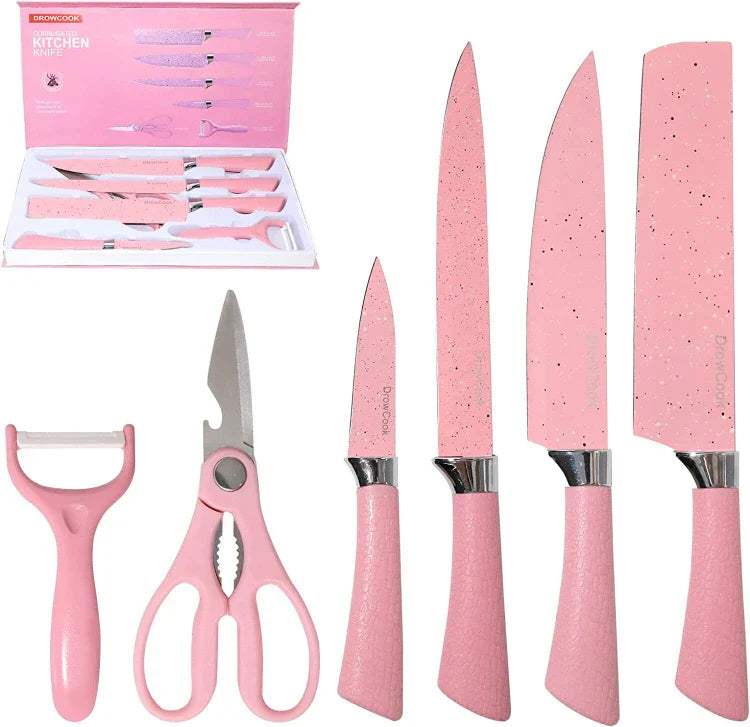
I often get asked about fun, aesthetic sets—like the Hello Kitty knives. Here is my take: It’s okay to have fun in the kitchen, but don't let it compromise your performance.
These sets are great for light prep and bring personality to your space. However, evaluate them honestly: Is the handle truly ergonomic? Is it full-tang? If you want a stylish set, use it for your light work, but always keep one "workhorse" professional knife nearby for the heavy lifting. You can have both the aesthetic and the performance; just know which tool is for which job.
4. Maintenance: The Secret to Longevity
You can buy the best knife in the world, but it will fail if you mistreat it. My golden rule for any home cook is simple: Keep your knives away from fire and burners.
High heat can ruin the temper of the steel and cause wooden handles to warp or crack. Treat your knives with respect, wash them by hand, and keep them away from the stove, and they will serve you for years.
The Final Verdict: Your Checklist for Success
When you are ready to buy, don't be swayed by marketing. Follow this checklist to ensure you’re making a smart investment:
-
Check for Seamless Design: Can you clean it easily? Are there crevices or nails that trap food?
-
Evaluate the Quality: Is it full-tang? Is the steel high-grade stainless?
-
Prioritize Comfort: Does it feel good in your hand, or is it too heavy/unbalanced?
-
Match Your Theme: Once you’ve confirmed the quality, then pick the color or design that matches your kitchen’s theme.
Remember: A great knife set isn't just about how it looks on your counter—it's about how it feels when you're preparing a meal for the people you love. Choose tools that are easy to clean, built to last, and a joy to use every single day.